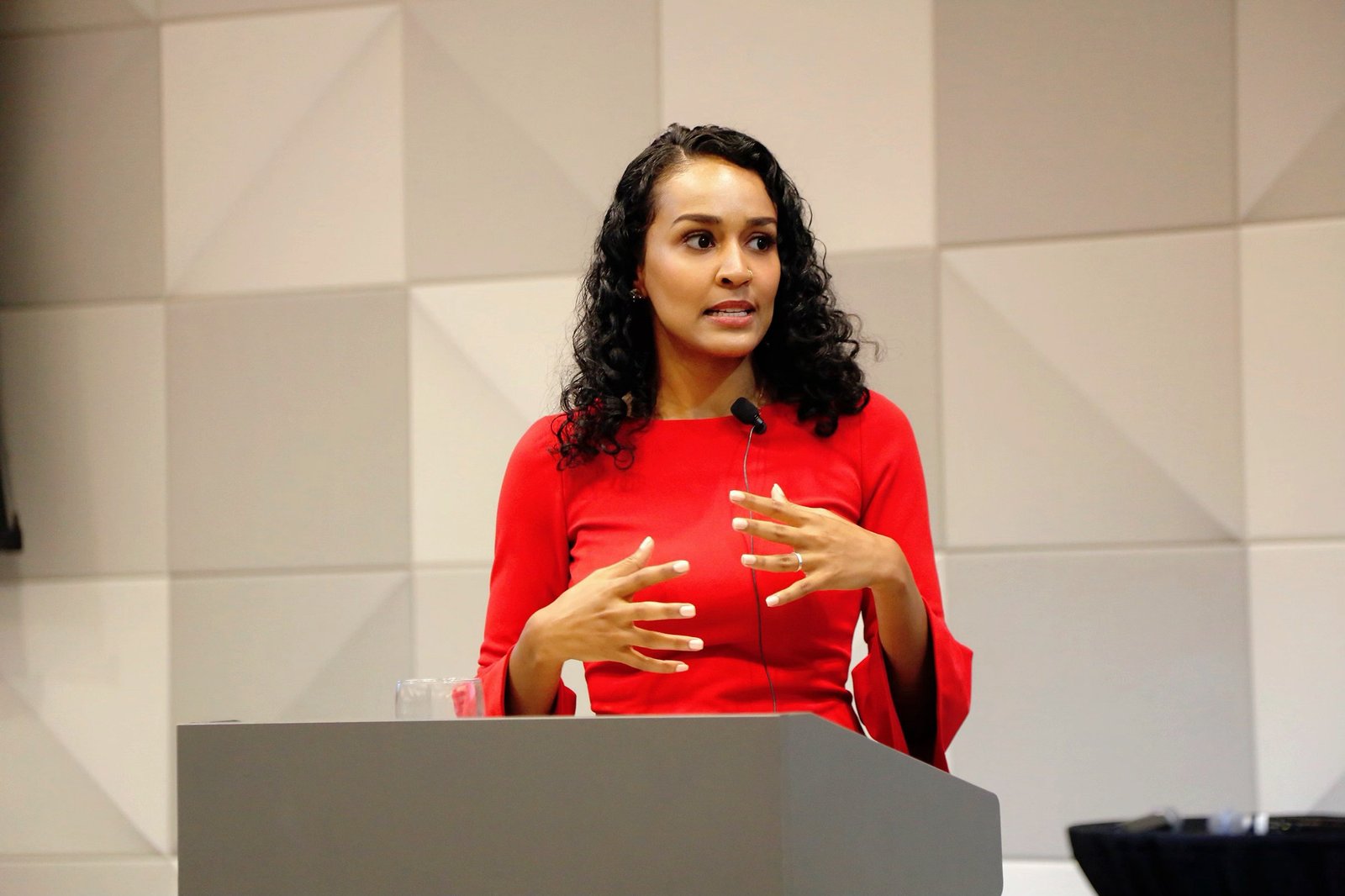
Abir Ibrahim’s journey is not just a tale of personal triumph—it’s a roadmap for anyone who’s ever dared to turn adversity into action. Born in Sudan, shaped by displacement, and driven by a relentless commitment to equity, her story reminds us that change begins with one person’s refusal to accept the status quo. Let’s explore how she became a beacon of hope for women and communities worldwide.
Early Life: Forged by Conflict, Fueled by Stories
Abir’s childhood in Khartoum, Sudan, was marked by civil unrest and displacement. Her family’s escape to Saudi Arabia and later the U.S. at age nine exposed her to stark inequalities. Yet, her father’s stories of her grandfather—a man who built the first community school in their village—planted seeds of resilience. “Those tales taught me that education isn’t a privilege; it’s a weapon against injustice,” she later reflected .
Growing up, Abir witnessed women struggling for basic healthcare and education. “I saw mothers walking miles for water while caring for sick children. Their strength became my compass,” she shared. These experiences ignited her lifelong mission: to dismantle systemic barriers for women and girls.
Education: Building Bridges, Not Walls
Abir’s academic path was strategic. She earned a Bachelor’s in Psychology and a Master’s in Public Health, focusing on women and children in Sub-Saharan Africa. But she didn’t stop at textbooks. During her studies, she co-built a secondary school in rural Tanzania, complete with a library and science lab, serving 2,000+ students.
Her mantra? “Education is the foundation, but action is the house we build on it.” This philosophy drove her to blend theory with grassroots work—a balance that would define her career.
Career Milestones: From Grassroots to Global Platforms
Peace Corps & Health Advocacy
In 2014, Abir joined the U.S. Peace Corps as a Health Advisor in Tanzania. There, she designed programs to improve maternal health and combat HIV/AIDS, partnering with local governments to empower women through economic opportunities. “You can’t talk about health without addressing poverty or gender inequality,” she argued.
Inua Naturals: Beauty with a Purpose
After witnessing a neighbor die from AIDS-related complications—a tragedy linked to poverty and lack of healthcare—Abir founded Inua Naturals in 2015. This social enterprise trains marginalized women in Tanzania to produce organic skincare products, connecting them to global markets. “Every lip balm or shea butter jar sold is a step toward financial independence for these women,” she explained.
The results? Over 1,000 women have gained sustainable incomes, and profits fund community health and education initiatives.
UNICEF & Global Advocacy
As UNICEF USA’s Community Engagement Fellow, Abir mobilized youth and influencers to advocate for children’s rights. She also advised on Sudan’s education crisis, highlighting that 3.9 million children lacked access to primary schools. Her work took her to the UN Human Rights Council and the Commonwealth Africa Forum, where she became the first Sudanese representative to address gender inclusion 5.
World Economic Forum: Shaping Policy
Today, as Associate Director of Africa at the World Economic Forum, Abir influences policies on sustainability and youth empowerment. “If we want equitable growth, we need diverse voices at the table—especially women from the Global South,” she asserts.
Challenges: Navigating Storms with Grace
Abir’s path wasn’t without obstacles. In conflict zones, logistical nightmares—like delivering supplies amid Sudan’s civil war—tested her resolve. “Sometimes you’re rebuilding a school while hearing gunfire in the distance,” she recalled.
As a first-generation immigrant in male-dominated spaces, she often felt isolated. “I was the only woman of color in many rooms. It’s exhausting, but it’s why I keep pushing—so others won’t have to face that loneliness” .
Contributions: A Legacy of Empowerment
- Economic Justice: Inua Naturals has disrupted cycles of poverty for women farmers, proving that ethical business can drive social change.
- Education Access: From Tanzanian schools to UN podiums, Abir champions education as a tool for liberation.
- Health Equity: Her public health initiatives have reached thousands, reducing maternal mortality and HIV rates.
- Media & Mentorship: Through her YouTube channel and newsletter, she demystifies career development for 100,000+ followers. “If I can help one woman negotiate a better salary, that’s a win”.
Impact: Ripples of Change
Abir’s influence spans continents:
- 3.9 Million Children: Her advocacy brought global attention to Sudan’s education crisis.
- 100,000+ Followers: Her free resources on scholarships and financial literacy empower a new generation.
- Awards & Recognition: Named among the 100 Most Influential African Women (2023) and a TEDx speaker, she’s redefining leadership.
Her secret? “You don’t need a grand title to make a difference. Start where you are, use what you have.”
Key Takeaways: Lessons from Abir’s Journey
- Turn Pain into Purpose: Adversity can fuel meaningful action.
- Education + Action = Change: Knowledge is power, but only when applied.
- Build Communities, Not Hierarchies: Lift others as you climb.
- Embrace Your Roots: Identity is a source of strength, not a limitation.
- Balance Boldness with Self-Care: “You can’t pour from an empty cup.”
Connect with Abir
- Website: www.abiribrahim.com
- YouTube: @AbirIbrahim
- Instagram: @AbirIbrahim
- Newsletter: Career tips & opportunities
Sources
- Abir Ibrahim’s Official Website
- C-Suite Africa Profile
- World Economic Forum Role
- EverybodyWiki Bio
- Leadership Africa Summit 2018
Final Thought
Abir Ibrahim’s story isn’t about perfection—it’s about persistence. Whether you’re a student, a CEO, or a stay-at-home mom, her journey whispers: Your voice matters. Your actions count. Now, go write your own chapter.
