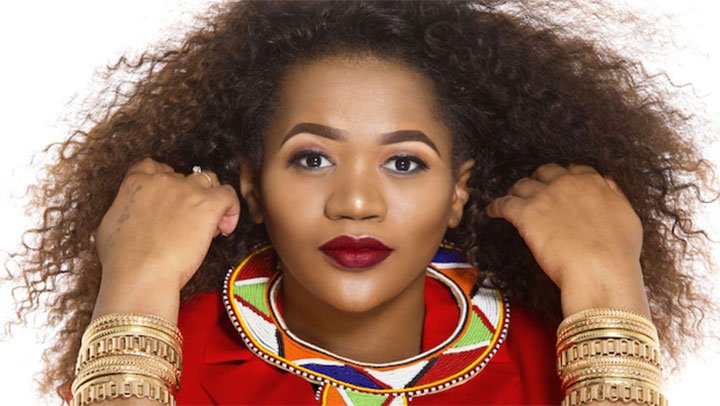
What does it take to rise from a tough childhood to rocking stages across the globe? For Busiswa Gqulu, it’s a blend of raw talent, relentless hustle, and a heart that beats for her roots. Born in 1988 in Mthatha, South Africa, this singer-songwriter, poet, and mother has become a powerhouse in African music, blending Gqom, Amapiano, and her Xhosa heritage into beats that make you move—and think. Her journey is messy, real, and downright inspiring, whether you’re a young woman chasing dreams, a mom juggling life, or anyone who’s ever faced a “no” and turned it into a “watch me.” Let’s dive into her story, full of grit, groove, and a sprinkle of humor, because Busiswa’s life is anything but ordinary.
Early Life: Finding Her Voice in Tough Times
Busiswa Gqulu came into the world on November 8, 1988, in Mthatha, Eastern Cape—a place known for its resilience as much as its struggles. Growing up, she was surrounded by the rhythms of township life and the strength of the women who raised her: her late mother and grandmother. “I spent my early years under their care,” she’s said, nodding to how they shaped her fierce personality. Imagine a little girl, wide-eyed, soaking up stories and songs, her feet tapping to the beat of a community that never stopped moving.
When she was young, her family relocated to Durban, a shift driven by her parents’ work. It wasn’t always easy—money was tight, and opportunities weren’t handed out like flyers. At 15, Busiswa found poetry, a spark lit by her primary English teacher. “I performed my first piece at my grandmother’s funeral,” she shared in a ZAlebs interview. That moment wasn’t just a goodbye; it was a hello to her voice. Picture her, a teenager with a pen, scribbling verses while the world buzzed around her—already dreaming bigger than her circumstances.
Education: A Path Cut Short, Then Redrawn
School was a mixed bag for Busiswa. She matriculated in 2005 from Mowat Park High School in Durban, a milestone that felt like a victory in itself. She had big plans—heading to the University of KwaZulu-Natal to study law and commerce. But life had other ideas. “I couldn’t finish because of financial difficulties,” she’s explained on The Daily Vox. Her parents couldn’t afford university, and when her mom passed, the ground shifted beneath her. Suddenly, she was squatting at a friend’s place, doing odd jobs to scrape by.
Ever been at a crossroads where the safe route vanishes? That’s where Busiswa stood. Instead of folding, she leaned into poetry, performing at local gigs and teaching kids at an art center. It wasn’t a degree, but it was an education in survival, creativity, and grit. “My parents supported my career choice because they had no money to take me further,” she’s quipped, a wry smile hinting at the irony. That detour shaped her—proof that learning doesn’t always need a classroom.
Career Milestones: From Poetry to Global Stages
Busiswa’s big break didn’t come with a spotlight—it started with a beat. In 2011, while spitting poetry at live readings in Durban, she met Sir Bubzin, who invited her to lace his track “Syaphambana” with her words. It caught the ear of Oskido, Kalawa Jazmee Records’ CEO, who signed her on the spot. Later that year, she recorded “My Name Is” with DJ Zinhle—a hit that exploded across South African radio. “I got a flight booking out of the blue to Johannesburg,” she laughed in her documentary Busiswa: An Unbreakable Story. Can you imagine the rush? From poetry nights to studio lights, overnight.
The song snagged nominations at the Channel O Music Video Awards and South African Music Awards, putting Busiswa on the map. She moved to Joburg, joining Kalawa Jazmee, and gigs flowed—Zimbabwe, Angola, Namibia. Hits like “Ngoku” (2013) and “Lahla” (2015) followed, each a dance floor anthem. In 2017, she dropped her debut album, Highly Flavoured, with “Bazoyenza” leading the charge. “I wanted to make music that moves people,” she told BBC. It did—earning her a Best Kwaito Album nod at the SAMAs.
Then came 2019: Beyoncé tapped her for “My Power” on The Lion King: The Gift. “I was at home, unable to travel, and suddenly I’m on a track with Queen Bey,” she said at the Music In Africa Conference. That collab, alongside Moonchild Sanelly, wasn’t just a flex—it was history. Her second album, Summer Life (2018), and third, My Side of the Story (2020), cemented her shift to Amapiano, blending it with her Gqom roots. Awards piled up—Mail & Guardian’s 200 Young South Africans (2014), multiple SAMA nods, and a starring role in her 2021 BET Africa docu-series, Her Majesty: Busiswa. From township poet to global icon—talk about a glow-up.
Challenges: Breaking Barriers and Bouncing Back
Busiswa’s rise wasn’t all smooth beats. As a Black woman in a male-heavy industry, she faced doubt head-on. “People think dance music means you’re not smart,” she told The Citizen, chuckling at the stereotype. Early on, she’d walk into rooms where folks assumed she was the backup, not the star. And then there’s the personal stuff—leaving an abusive ex-partner, Katlego “DJ Kaygee” Mlangeni, after he allegedly got physical in 2019. “I’m raising my son with better gender roles,” she said in her documentary, her voice steady but soft.
Motherhood added another layer. She gave birth to her son, Kgosi Lakhanya Gqulu, in January 2018, juggling late-night studio sessions with early-morning diaper runs. “I look at my bank balance and get inspired—I need to hustle,” she laughed on Her Majesty. The 2020 lockdown hit hard, too—her hit “Coming” with Naira Marley topped charts in 10 countries, but travel bans kept her home. “At least I gained a huge listenership,” she shrugged. That’s Busiswa: turning roadblocks into rhythms.
Contributions: Music, Mentorship, and Matriarchy
Busiswa’s music isn’t just catchy—it’s a movement. She’s brought Gqom and Amapiano to the world, fusing Xhosa chants with modern beats. “I’ll always put women first in my music,” she told BBC, a promise she keeps in tracks like “Makazi” and “SBWL.” Her collabs—with Prince Kaybee, Kamo Mphela, Beyoncé—showcase Africa’s sound, breaking language barriers. “We were singing Angelique Kidjo in the ‘90s not knowing what ‘Agolo’ meant,” she laughed at the Music In Africa Conference. Her point? Music connects us, no translation needed.
Beyond the mic, she’s a mentor. Through Art for Humanity and the Umlazi District Department of Education, she runs workshops, teaching kids poetry and public speaking. “I want them to appreciate art,” she’s said. Her 2021 docu-series peeled back the curtain, showing her life—raw, real, and rooted in matriarchal strength. “South Africa is matriarchal—nurturing, loving,” she noted on The Daily Vox. She’s not just a star; she’s a storyteller lifting her community.
Impact: A Voice for the Voiceless
Busiswa’s influence is electric. In Mthatha and Durban, she’s a local legend—proof you can start small and soar. Across Africa, her music’s opened doors for female artists, challenging a male-dominated scene. “She’s a powerhouse,” DJ Oskido said in her documentary, calling her “lyrically gifted with presence.” Her Beyoncé feature put South Africa on the global map, while her reality show inspired fans to see the woman behind the hits.
For women, she’s a mirror. Young girls in Soweto or Lagos see her and think, “I can lead, too.” A fan on X once posted, “Busiswa’s journey gives me hope—I don’t have to fit in to stand out.” Her workshops spark creativity in kids, and her advocacy for gender equity—raising her son to respect women—shifts mindsets. From township stages to Afro festivals worldwide, she’s showing Africa’s got groove and grit.
Why She’s Your Spark
Busiswa Gqulu’s life isn’t a fairy tale—it’s a fight song. She’s the friend who’d flop on your couch, admit she’s tired, then get up and crush it anyway. “I try to live an honest life,” she said on Her Majesty, and that rawness connects. Her story asks: What’s stopping you? Not the big stuff—poverty or heartbreak—but the sneaky doubts. She didn’t wait for a handout; she made her own stage.
Her humor keeps it light—like joking about needing to hustle for her bank balance. That’s her magic: she’s real, relatable, and ready to cheer you on. From a poet with no degree to a global sensation, she’s proof that your voice, however it starts, can echo far.
Key Takeaways: Steps to Your Own Beat
Busiswa’s journey offers gems to grab:
- Find Your Voice: Poetry saved her—what’s your outlet?
- Push Past Limits: No degree? She still soared. What’s your detour?
- Own Your Roots: Her Xhosa heritage fuels her—what’s yours?
- Lift Others: She mentors kids—who can you inspire?
- Keep Moving: Abuse, lockdown, doubt—she danced through it. What’s your next step?
Take one. Try it. Feel the rhythm.
Sources
- Wikipedia: “Busiswa”
- The Daily Vox: “Busiswa: An Unbreakable Story”
- BBC: “Busiswa Aims to Empower Women”
- ZAlebs: “Busiswa Gqulu Biography”
- Music In Africa Conference: Q&A with Busiswa (2021)
- The Citizen: “Busiswa on Her Majesty”
Busiswa Gqulu isn’t just a star—she’s a signal. From Mthatha to the world, she’s shown that your beat can change lives. So, what’s your song? Grab it, sing it, and know Busiswa’s rooting for you—probably with a dance move and a laugh to match.
