
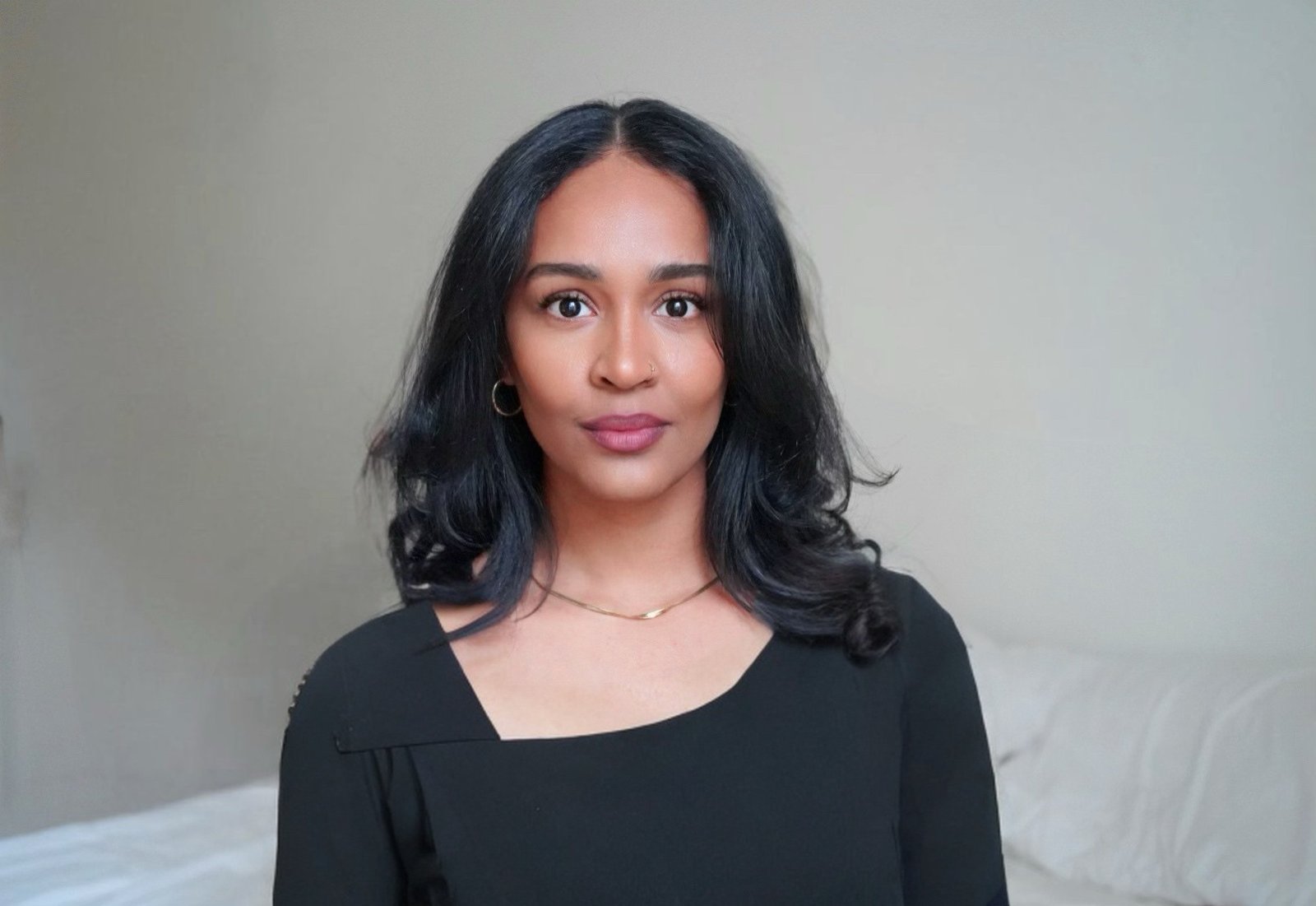
Have you ever looked around a high-stakes meeting, a policy discussion, or a leadership forum and felt a pang of recognition – the subtle, sometimes stark, awareness of being the only one representing your background, your gender, your heritage? For Abir Ibrahim, this wasn’t just a fleeting observation; it became a catalyst. Over a decade spent navigating global policy and economic development circles within prestigious institutions like the U.S. Government, the United Nations, and the World Economic Forum, she saw a critical gap: a lack of diverse representation in decision-making spaces and, crucially, incomplete narratives about Africa. Too often, she found herself the sole woman, immigrant, or person of color in the room.
But Abir Ibrahim doesn’t just occupy seats; she builds bridges. Her core belief is that “leadership is about bridging worlds—connecting policy with action, history with strategy, and local resilience with global impact”. This philosophy permeates her journey, transforming personal experience into a powerful mission. As a first-generation Sudanese-American development economist and social entrepreneur, she has dedicated her career not just to participating in global conversations but actively reshaping them. Her work involves everything from shaping economic strategies with world leaders to using digital storytelling to challenge persistent, damaging misconceptions about the African continent. Her mission is clear and resonant: “open doors, reshape narratives, and empower more people to create impact”. This is the story of how she does it.
Roots of Resilience: From Khartoum Streets to Global Dreams
Abir Ibrahim’s story begins in Sudan, a nation she describes as having been “wrapped in a civil war until it broke itself in half”. Born during this period of civil unrest, her early life was inevitably shaped by the surrounding conflict and instability. She witnessed firsthand the devastating impact of famine, which left much of the population without reliable access to clean water, food, or adequate healthcare. Seeing women and children living in severe poverty, struggling for basic needs, left an indelible mark.
Yet, amidst these challenges, narratives of resilience and hope were woven into her upbringing. Her family history itself held seeds of inspiration. Her father often shared stories of her grandfather, a man with a deep love for literature and poetry, who took the initiative to establish the first community school in their village. This legacy of valuing education and community service became a quiet undercurrent in her life.
Her parents, constantly seeking opportunities for survival and growth, instilled in her a profound gratitude for the support they received, sometimes from unknown hands offering help. This experience fostered a deep understanding that individual progress is often intertwined with community support. It was this relentless search for a better life, fueled by the opportunities afforded by others, that eventually led her family to relocate – first to Saudi Arabia, and then, when Abir was nine years old, to the United States. These early experiences – witnessing hardship, learning about her family’s commitment to education, and understanding the power of community support – laid the foundation for her later path. They cultivated not only resilience but also a powerful sense of responsibility, a feeling that she needed to “pay it forward” for the opportunities she had been given.
Finding Purpose Across Continents: Education and the Peace Corps Crucible
The drive instilled in her early years propelled Abir towards education, not just as a means of personal advancement, but as a tool for understanding and addressing the challenges she had witnessed. She pursued a Master’s degree in Public Health, specifically choosing to focus on the health of women and children in Sub-Saharan Africa. This academic path, combined with an undergraduate background in biological psychology, equipped her with a framework for analyzing health disparities and advocating for vulnerable populations.
However, Abir’s journey wasn’t confined to lecture halls. Theory met reality when she joined the U.S. Peace Corps, serving as a Health Advisor in rural Tanzania. This experience proved to be a pivotal “crucible,” forging her understanding in the heat of direct engagement. It was here, on the frontlines, that she “saw firsthand how economic exclusion holds communities back”. Leading major health initiatives, likely involving PEPFAR and USAID-funded projects, she worked directly with communities, addressing critical issues and promoting well-being. Some accounts suggest her commitment extended to collaborating with local partners to help build the first secondary school in a Tanzanian village, potentially impacting over 2,000 students – a powerful echo of her grandfather’s legacy.
This period was transformative. It moved her understanding beyond statistics and reports to the lived realities of individuals and communities. The Peace Corps experience solidified the connection between health outcomes, educational opportunities, and, crucially, economic empowerment. It provided the grassroots perspective that would become a hallmark of her approach, demonstrating that sustainable change required addressing the underlying economic factors that limited people’s choices and opportunities. This wasn’t just a job; it was the experience that crystallized her purpose and set the stage for her next, deeply personal, venture.
Sparking Change from the Ground Up: The Birth of Inua Naturals
Sometimes, the most powerful catalyst for action is born from personal loss. While serving in Tanzania, Abir experienced the death of a neighbor due to AIDS. This deeply affecting event, coupled with her direct observations of the pervasive gender poverty gap holding women back in the village, ignited a new resolve. It wasn’t enough to simply implement health programs; she felt compelled to address the economic vulnerabilities that often underpinned health crises. This led her to establish Inua Naturals Inc..
The name itself, “Inua,” is Swahili for “to uplift”. It perfectly encapsulates the social enterprise’s mission: a commitment to celebrate and empower underserved women in rural East Africa. Inua Naturals became Abir’s way of directly combating the gender poverty gap by providing tangible economic opportunities. The enterprise works with marginalized women farmers and artisans – over 154 were involved according to one report – helping them jump-start farms, build businesses, and sustainably increase their income.
But Inua goes beyond just economics. It integrates community-driven solutions to improve access to health and education, recognizing the interconnectedness of these issues. The core of the business model involves empowering these women through agribusiness and tech innovation. They focus on using locally, ethically, and sustainably sourced ingredients from women-owned farms in East Africa, making sustainability central to empowering women and their communities. Inua Naturals formulates natural skincare products inspired by African beauty and health traditions, designed to nourish and heal.
Through Inua, Abir aimed to “create new industry and economies for women who do not otherwise have access to the global consumer”. The goal was clear: enable these women to rise above poverty, raise healthier families, stimulate their local economies, and inspire those around them. This venture became a powerful vehicle for another aspect of Abir’s mission: reshaping narratives. As she stated, reflecting on perceptions of the continent, “A lot of people don’t understand Africa the way Africa really is, except from extreme poverty and disease that are being projected in the media. There is so much more to African history and culture, and beauty secrets, we would like to have an opportunity to showcase that”. Inua Naturals, therefore, is more than a business; it’s a tangible expression of Abir’s belief in the potential of African women and a platform to share a richer, more authentic story of the continent.
Scaling Impact: From UNICEF Frontlines to the World Economic Forum
Abir Ibrahim’s commitment to driving change didn’t stop with her entrepreneurial venture. Her career path demonstrates a clear trajectory of scaling her impact, moving from direct community engagement to influencing systemic change at national and global levels. Her work with UNICEF provided crucial experience in this transition. She served within the organization both in Sudan, where she led the Private Sector portfolio, driving corporate partnerships to support vital education, health, and economic development programs for vulnerable communities, and with UNICEF USA as a Community Engagement Fellow. In this latter role, she partnered with leading influencers, organizations, and communities to advocate for and support the world’s most vulnerable children. Field visits, like one documented where she observed UNICEF and partners empowering women to combat child malnutrition through education and resources, provided continued grounding in the realities faced by communities. These women, trained to educate others and involve men, successfully reduced malnutrition rates by 20% in three years, showcasing the effectiveness of women-led, grassroots change.
This blend of field experience and strategic partnership work paved the way for her current role at the prestigious World Economic Forum (WEF). As Associate Director for Africa, Abir operates at the intersection of policy, business, and development on a continental scale. Here, she has found a significant platform to amplify African voices and advocate for solutions tailored to the continent’s unique needs and opportunities. Her specific focus includes leading government engagement strategy and driving the regional sustainability agenda for West and Central Africa.
In this capacity, she engages directly with heads of state, business leaders, and multilateral institutions to mobilize investments and advance economic integration across the continent. She embodies the role of a “bridge builder,” tirelessly working to ensure that regional realities inform global discussions and that African perspectives are central to international discourse. This involves facilitating crucial partnerships between African nations and global institutions, fostering collaboration on critical issues like climate change adaptation, sustainable infrastructure development, and harnessing technological advancements for inclusive growth. Her thought leadership is also evident in her contributions to the WEF’s public platform, where she writes on topics ranging from Africa-Europe green transition partnerships to the role of business diplomacy in conflict zones like Sudan, and the potential of upcycling waste in Uganda’s circular economy. Her journey from the Peace Corps frontlines to the halls of the WEF illustrates a remarkable ability to translate grassroots understanding into high-level strategic action, consistently advocating for a sustainable and thriving future for Africa.
The Digital Bridge: Storytelling for Change
Alongside her demanding roles in international organizations and her social enterprise, Abir Ibrahim wields another powerful tool for impact: digital storytelling. She recognizes that changing policies and driving investment is only part of the equation; shifting perceptions and empowering individuals requires reaching them directly, and often, that means meeting them online. She explicitly uses her digital presence to “challenge misconceptions and highlight Africa’s history, influence, and contributions”, directly combating the incomplete and often negative narratives she encountered in high-level discussions.
Her commitment to this digital bridge is evident in her significant online community. With over 100,000 followers across her platforms and more than 3 million views on her YouTube channel, she has cultivated a substantial audience eager for her insights. Her YouTube channel, where she identifies as an international development practitioner based in Switzerland, is dedicated to sharing “everything I know (and learn along the way) about travel, career, and self-development to create a life of impact”.
Her content is a blend of practical advice, personal reflection, and cultural exploration. Videos like “8 Career Mistakes I Made in My 20s (And How to Avoid Them)” offer relatable guidance drawn from her own experiences, while vlogs documenting her travels and daily life in Sudan, Ethiopia, Tanzania, Gambia, and other African nations provide authentic glimpses into the continent, attracting hundreds of thousands of views. Through these platforms, including a newsletter sharing career opportunities, financial literacy tips, and African historical insights, she makes complex global issues “accessible and actionable”. She breaks down topics ranging from economic development and global policy to personal growth, helping her audience navigate their own careers, build wealth, and understand Africa’s dynamic role. For Abir, digital storytelling isn’t a side project; it’s integral to her mission, a vital way to open doors, reshape narratives, and empower a wider audience to create their own impact.
Navigating Headwinds: Resilience in Action
Abir Ibrahim’s journey, while inspiring, has not been without its share of headwinds. Building a career focused on development and empowerment, particularly in regions marked by instability, inevitably involves confronting significant obstacles. Operating in areas affected by conflict and poverty, as she did during her time in Sudan and Tanzania, presents inherent challenges, from potential resistance to logistical hurdles that require immense adaptability.
Furthermore, the feeling of being the “only woman, immigrant, or person of color” in many high-level professional settings is a challenge she has openly acknowledged. This experience, while a catalyst for her mission, likely required navigating spaces not always designed with diverse perspectives in mind, demanding extra layers of resilience and strategic communication.
Balancing the demanding roles of an international policy expert, a social entrepreneur leading Inua Naturals, a digital storyteller, and an advocate required – and continues to require – exceptional resilience and adaptability. The path wasn’t linear or easy. However, rather than being defined by these obstacles, Abir’s story showcases how she navigated them. She consistently drew strength from her community connections and the lessons of perseverance embedded in her upbringing. The challenges encountered in the field likely provided invaluable, hard-won insights that now inform her policy work, lending her advocacy a grounded, practical perspective that can be rare in global forums. Her journey demonstrates that resilience isn’t just about enduring difficulty, but about transforming challenging experiences into fuel for continued action and deeper impact.
A Legacy in Motion: Impact and Recognition
The ripples of Abir Ibrahim’s work spread wide, touching lives from rural East African communities to the halls of global policy forums. Her impact is multifaceted, demonstrating a remarkable ability to effect change across different scales. Through Inua Naturals, she has directly empowered scores of women farmers and artisans, providing them with sustainable income, business opportunities, and a connection to the global market, thereby actively combating the gender poverty gap. This economic empowerment is intrinsically linked to improved access to health and education within their communities, addressing the root causes she identified early in her career.
Her advocacy extends beyond her own initiatives. Representing Sudan at the UN Human Rights Summit Council in 2018, she forcefully highlighted the critical importance of girls’ education, drawing attention to the millions of Sudanese children lacking access to primary schooling. This commitment to education echoes her grandfather’s legacy and her own efforts in Tanzania.
Consistently, she works to reshape narratives about Africa, using her platform at the WEF, her digital presence, and even her social enterprise to showcase the continent’s richness, potential, and complexity beyond outdated stereotypes. Her efforts have not gone unnoticed. Abir has been recognized as one of the 100 Most Influential African Women by Avance Media in 2023, placing her among esteemed leaders on the continent. Her insights have been featured in prominent international media outlets like CNBC, Voice of America, The Guardian, African Business Magazine, and HuffPost. She was also honored as a 2019 Ambassador for the Institute for Economics & Peace, aiming to connect policymakers and youth in Sudan’s peacebuilding process, and recognized among impactful African voices and entrepreneurs by platforms like ABCD Africa and Development Reimagined.
Described as a “bridge builder, a champion for sustainability, and a beacon of hope for a thriving Africa”, Abir Ibrahim continues to be a dynamic “driving force for positive change”. Her impact lies not only in the tangible outcomes of her projects but also in inspiring a new generation of leaders – particularly women – to believe in their own capacity to bridge worlds and build a better future. Her legacy is not static; it is actively being written through her ongoing commitment to solutions-driven, globally inclusive, and unapologetically forward-looking action.
Your Turn to Bridge Worlds: Lessons from Abir Ibrahim
Abir Ibrahim’s journey offers powerful lessons for anyone seeking to make a difference, navigate challenges, and build a life of impact. Her story isn’t just about reaching global stages; it’s about how she got there and the principles that guide her. Here are a few takeaways inspired by her path:
- Embrace Your Unique Perspective: Abir transformed the experience of being the ‘only one’ in the room from a potential disadvantage into a driving force for her mission. Her story suggests recognizing the unique insights your background, experiences, and identity bring. What gaps do you see? How can your perspective contribute to filling them?
- Connect Personal Experience to Purpose: Witnessing hardship and losing a neighbor fueled Abir’s determination to create Inua Naturals. Reflect on your own life experiences – the challenges, the joys, the observations. How can these personal encounters inform a larger purpose or mission?
- Start Where You Are, Act Now: Abir’s advice resonates with urgency: “If it’s not you then who and if it’s not now then when?”. Don’t wait for the ‘perfect’ moment, degree, or paycheck to start contributing. As she believes, even small actions can cast stones across water, creating ripples that inspire wider change. What step, however small, can you take today?
- Bridge Your Worlds: A central theme in Abir’s work is connection – linking policy to action, local needs to global resources, history to strategy. Consider the different spheres of your own life – your skills, passions, communities. How can you build bridges between them to create something new or amplify your impact?
- Tell Your Story (and Amplify Others’): Abir actively uses storytelling to challenge stereotypes and share authentic narratives about Africa. Your story matters, too. Use your voice, whether online or offline, to share your perspective and, importantly, to lift up the stories of others whose voices may not be heard as easily.
- Invest in Women and Communities: Abir deeply believes that investing in women’s economic development is key to reducing poverty and achieving broader development goals. How can you support and empower women in your own field, community, or network? Recognizing that this empowerment benefits everyone is crucial.
- Pay It Forward: Remembering the support her family received, Abir feels a strong responsibility to create opportunities for others. Think about who has helped you on your journey. How can you extend a hand, share knowledge, or open a door for someone else?
Abir Ibrahim’s life demonstrates that leadership isn’t about having all the answers, but about asking the right questions, connecting deeply with purpose, and taking courageous action, one bridge at a time.
Connect and Learn More
To follow Abir Ibrahim’s work, insights, and journey, you can connect with her through her official channels:
- Website: https://www.abiribrahim.com/
- YouTube: @abiribrahim / https://www.youtube.com/c/abiribrahim
- Instagram: @itsabiribrahim
- Twitter / X: @itsabiribrahim
- Facebook: https://www.facebook.com/itsabiribrahim
Sources
The information presented in this article was compiled from the following credible sources:
- Abir Ibrahim Official Website: https://www.abiribrahim.com/
- World Economic Forum Author Profile: https://www.weforum.org/stories/authors/abir-ibrahim/
- BLK + GRN Interview: https://blkgrn.com/blogs/articles/abir-of-inua-naturals
- CSuite Africa Profile: https://csuiteafrica.com/csuite/abir-ibrahim-a-beacon-of-empowerment-for-african-women/
- Global Leadership Africa Summit Bio: https://afsummit.com/abir-ibrahim/
- CEO Enterprise Magazine Profile: https://ceoenterpriseorg.com/abir-ibrahim-associate-director-world-economic-forum/
- Avance Media – Most Influential African Women (via Africa.com): https://africa.com/avance-media-announces-2023-most-influential-african-women-list/
- Marco LeRoc Podcast Interview Snippet (YouTube): https://www.youtube.com/watch?v=8XpyPArCAoM
- Abir Ibrahim YouTube Channel: https://www.youtube.com/c/abiribrahim
- In Her Shoes Blog (Holiday Gift Guide featuring Inua Naturals): https://inhershoesblog.com/in-her-shoes-2019-holiday-gift-guide-75-black-women-owned-brands-to-shop
- One Young World Weekly Roundup (IEP Ambassador): https://www.oneyoungworld.com/news-item/weekly-roundup-april-2019
- The Guardian Nigeria (ABCD Africa Impactful Voices): https://guardian.ng/features/abcd-africa-100-most-impactful-voices-list-2nd-edition/
- African Business Magazine (Mention): https://african.business/2024/04/trade-investment/are-africa-china-relations-helping-over-1-billion-women
- UNICEF Video featuring Abir Ibrahim’s field visit commentary:(https://m.youtube.com/watch?v=vWuItegoTV8)
500 Words Magazine (Sudanese YouTubers): https://500wordsmag.com/suda-lists/sudanese-youtubers-you-should-know-about/
