
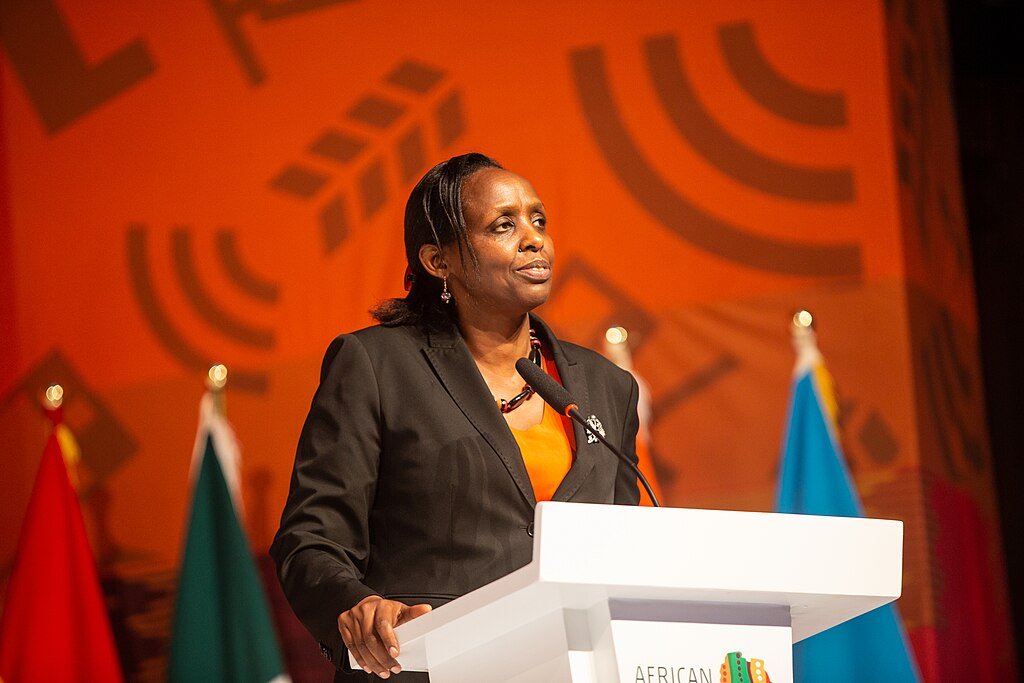
Few journeys light up a path as brilliantly as that of Dr. Agnes Matilda Kalibata. A Rwandan agricultural scientist, policymaker, and visionary leader, she has dedicated her career to reshaping food systems across Africa. Today, as the President of the Alliance for a Green Revolution in Africa (AGRA) and a UN Special Envoy for the 2021 Food Systems Summit, Dr. Kalibata not only champions sustainable agriculture but also inspires countless women to believe in their ability to drive change. Her story—rooted in resilience, determination, and a relentless commitment to improving lives—serves as a beacon for women of all ages.
Early Life: From Displacement to Determination
Dr. Kalibata’s journey began in Rwanda, but her early years were shaped by adversity. Born to smallholder farmers, her family was forced to flee due to political strife during Rwanda’s struggle for independence in the early 1960s. She spent her formative years in a refugee camp in Uganda, where she witnessed firsthand the harsh realities of displacement. Yet, amid the uncertainty, there was also hope. In the refugee camp, her parents cultivated beans and maize and even kept cows—small acts that instilled in her the value of agriculture as not just a means to survive but as a foundation for building a better future.
Growing up in these challenging circumstances, young Agnes learned early on that education was a powerful tool for change. Her father, a teacher before the upheaval, made sure that she and her siblings had access to learning despite the difficult conditions. One can imagine a little girl sitting under a makeshift shelter, dreaming big while watching the small plots of land her parents tended. These early experiences planted a seed—a belief that if one could harness the potential of agriculture, poverty and hunger could one day be overcome.
Education: Building a Scientific Foundation
Dr. Kalibata’s educational path is a testament to her determination to transform the lives of her people. She pursued her undergraduate studies at Makerere University in Uganda, earning a bachelor’s degree in entomology and biochemistry. Here, she discovered a fascination with the tiny creatures that play huge roles in our food systems. She recalls with a smile, “I was mesmerized by how some insects could regrow their legs after being cut off. It wasn’t magic—it was science, and it showed me that nature has ingenious ways to adapt.” Such curiosity would drive her academic pursuits for years to come.
She furthered her studies at Makerere University with a master’s degree in agriculture, equipping herself with the knowledge to understand and tackle the challenges of food production in Africa. Determined to take her expertise even further, Dr. Kalibata earned her Ph.D. in entomology from the University of Massachusetts Amherst. Her research, grounded in the principles of scientific inquiry and practical application, provided her with a robust foundation to later apply cutting-edge science to the pressing issues of agriculture and food security on the continent.
Breaking Into the Political Arena: A Catalyst for Change
After completing her studies, Dr. Kalibata began her career with research at the Kawanda Agricultural Research Institute and the International Institute of Tropical Agriculture. However, her vision extended far beyond the laboratory. Determined to create tangible improvements in the lives of smallholder farmers—much like her own family—she returned to Rwanda. In 2008, she stepped into the role of Rwanda’s Minister of Agriculture and Animal Resources.
Taking on such a responsibility was no small feat. Imagine being thrust into a position where every decision could mean the difference between hunger and nourishment for millions. Dr. Kalibata embraced the challenge with a resolve fueled by her own experiences of scarcity and hope. Her tenure was marked by the introduction of science-based agricultural policies that prioritized the needs of family farmers. Under her leadership, Rwanda’s agricultural sector witnessed dramatic improvements:
- The national budget for agriculture soared from less than US$10 million to over US$150 million.
- Policies such as cooperative farming and innovative cow-sharing programs helped family farmers gain access to vital resources.
- Remarkably, within her term, the poverty level in Rwanda dropped by more than 50 percent.
These accomplishments not only transformed Rwanda from a food-insecure nation to one with improved food security but also set an inspiring example for other countries in the region.
Leading AGRA: Championing a Green Revolution in Africa
In 2014, Dr. Kalibata took on a new challenge as she became President of the Alliance for a Green Revolution in Africa (AGRA). Under her leadership, AGRA is on a mission to improve the food security and incomes of millions of smallholder farmers across 11 African countries. Her vision is clear: transform agriculture from a struggle for survival into a sustainable, thriving business.
At AGRA, Dr. Kalibata has overseen programs that provide small-scale farmers with better seeds, improved access to credit, and enhanced market linkages. By driving policies that support science-based interventions, she has been instrumental in increasing crop yields and fostering economic growth. One notable impact of her work is that innovative agricultural practices have enabled farmers to increase their production dramatically—turning modest yields into bumper harvests that feed communities and generate income.
Moreover, Dr. Kalibata’s work extends beyond technical interventions. She is a staunch advocate for gender equality in agriculture. In many parts of Africa, women remain underrepresented in leadership and decision-making. Dr. Kalibata believes that empowering women is not only a matter of fairness but also a strategic imperative for agricultural transformation. “When women lead, communities thrive,” she often says, emphasizing that gender equality is key to breaking the cycle of poverty and hunger.
Her leadership at AGRA also includes a strong focus on sustainability. With climate change posing new challenges, she is committed to promoting farming practices that protect natural resources while boosting productivity. Whether it’s through the development of drought-resistant crops or the adoption of improved soil management practices, Dr. Kalibata’s initiatives aim to secure the future of African agriculture in a changing climate.
Overcoming Challenges and Criticisms
Dr. Kalibata’s journey has not been without obstacles. Transitioning from academia and research into high-stakes political leadership required her to navigate complex policy environments and overcome skepticism. One major challenge was the need to translate scientific research into actionable policies—a process that can take years, even decades, to see results. Dr. Kalibata learned early on that for science-based policies to be effective, they must be implemented swiftly and with strong government support.
Critics have occasionally questioned the approaches taken during her tenure as agriculture minister, particularly regarding land consolidation policies and the allocation of financial support. However, Dr. Kalibata remains steadfast in her belief that transforming agriculture demands tough decisions and innovative thinking. “Change is never easy,” she acknowledges. “But if we want to end hunger and lift people out of poverty, we must take bold steps and sometimes face criticism head-on.”
Her commitment to accountability and transparency has also been central to overcoming these challenges. In her own words, “My job is to show that an African institution can manage resources responsibly. When people invest in our vision, we must prove that their money is used wisely and effectively.” This approach has not only bolstered trust among funders but has also inspired many young leaders to believe that with integrity and determination, obstacles can be overcome.
Impact and Global Contributions
The impact of Dr. Kalibata’s work is measurable in the transformed lives of millions of smallholder farmers. During her time as Rwanda’s Minister of Agriculture, her policies played a crucial role in reducing poverty and improving food security. Today, through her leadership at AGRA, she continues to drive agricultural transformation on a continental scale.
One striking example of her impact is seen in the adoption of improved seed varieties and sustainable farming practices. Under her guidance, many farmers have increased their crop yields substantially—moving from yields as low as 0.5 metric tonnes to levels that can reach up to five metric tonnes per year. Such improvements not only secure food for families but also open doors for farmers to participate in local and regional markets, creating a ripple effect of economic growth.
Beyond the borders of Rwanda, Dr. Kalibata has played a significant role on the international stage. In 2019, United Nations Secretary-General António Guterres appointed her as his Special Envoy for the 2021 Food Systems Summit. In this capacity, she worked to galvanize global action and foster partnerships aimed at reimagining food systems. Her appointment underscored her reputation as a trusted leader whose expertise and vision are critical for addressing some of the most pressing challenges of our time—hunger, malnutrition, and climate change.
Her advocacy for gender equality in agriculture is equally noteworthy. By promoting policies that empower women, she has helped pave the way for increased participation of women in agricultural leadership. Her efforts remind us that inclusive growth is essential for sustainable development and that when women succeed, entire communities flourish.
Personal Reflections and Leadership Style
Dr. Kalibata’s leadership style is marked by a balance of scientific rigor, practical policymaking, and genuine empathy. She often reflects on her own journey—one that took her from refugee camps to the highest echelons of agricultural policy. “I come from humble beginnings, and I understand the struggles of smallholder farmers because I grew up with them,” she says. This personal connection fuels her determination to ensure that every policy and program is designed to benefit those who need it most.
Her sense of humor and approachable demeanor have helped demystify the often intimidating world of policymaking. For instance, when asked about the complexities of agricultural research, she once joked, “If insects can regrow their legs, surely we can find a way to regrow opportunities for our farmers!” Such lighthearted moments not only break the ice but also serve as powerful reminders that innovation often comes with a touch of playfulness and creativity.
Dr. Kalibata also emphasizes the importance of collaboration. “Alone, we go fast; together, we go far,” she often remarks. This belief in the power of partnerships is evident in every facet of her work—from working with international donors and government agencies to mentoring young women in agriculture. Her ability to bring diverse stakeholders together is one of her most celebrated strengths.
Balancing a demanding career with family life is another area where Dr. Kalibata’s story resonates with many. As a mother of two twins, she has navigated the complexities of work-life balance with candid honesty. “There are days when I wonder if I sacrificed too much of my personal life for my career,” she admits with a smile. Yet, she also points out that the challenges of balancing professional ambitions with family responsibilities have only made her more determined to forge a path that supports and empowers other women.
Inspiring Quotes and Anecdotes
Dr. Kalibata’s journey is peppered with moments that inspire and motivate. Here are a few of her memorable words:
- “Ending hunger is going to require ambitious action at scale. We must invest in science, policy, and people to transform agriculture and secure our food future.”
- “I grew up in a refugee camp, where every meal was a reminder of what we could achieve if given the right tools. Today, I work to ensure that every smallholder farmer has access to those tools.”
- “When I see a farmer adopting improved seeds and sustainable practices, I see hope—hope that Africa can feed itself and that our people can rise out of poverty.”
These quotes capture the essence of her philosophy: that through innovation, collaboration, and persistent advocacy, we can overcome even the most daunting challenges.
Actionable Key Takeaways
Dr. Agnes Kalibata’s story offers valuable lessons for anyone looking to drive change, especially women aspiring to leadership roles:
- Embrace Your Roots:
Your background, no matter how humble, is a source of strength. Dr. Kalibata’s experiences in a refugee camp instilled in her a deep understanding of the struggles faced by smallholder farmers. Use your past as fuel for your future endeavors. - Invest in Education and Lifelong Learning:
Continuous education is crucial. Whether you pursue formal degrees or learn through practical experiences, never stop acquiring knowledge. Dr. Kalibata’s academic journey—from Makerere University to the University of Massachusetts Amherst—showcases the power of education in transforming lives. - Champion Science-Based Solutions:
Ground your work in research and data. Dr. Kalibata’s success in improving agricultural productivity was built on science-based policies that helped increase yields and improve food security. - Foster Collaboration and Partnerships:
No one can do it alone. Build networks with diverse stakeholders—government bodies, private sector partners, and community organizations. As Dr. Kalibata often says, “Together, we go far.” - Empower Women:
Advocate for gender equality in every sector. When women are given the opportunity to lead, communities flourish. Dr. Kalibata’s emphasis on empowering female leaders in agriculture is a testament to the transformative impact of inclusive leadership. - Maintain Accountability and Transparency:
Manage resources wisely and ensure that every investment is maximized for the benefit of those in need. Dr. Kalibata’s focus on accountability has helped build trust among funders and partners, proving that African institutions can lead with integrity. - Adapt and Innovate:
The agricultural landscape is constantly evolving. Stay adaptable, embrace new technologies, and be willing to revise strategies based on new evidence. Innovation is key to sustainable progress.
Verified Social Media and Further Connections
For those who want to follow Dr. Kalibata’s journey and stay updated on her work, here are her verified social media handles and online resources:
- Twitter (X): @Agnes_Kalibata
- AGRA Official Website: AGRA.org
- United Nations Profile: UN Special Envoy Profile
- Simple English Wikipedia: Agnes Kalibata
A Story to Inspire
Dr. Agnes Matilda Kalibata’s journey—from a refugee camp in Uganda to the helm of transformative agricultural policies in Africa—is an inspiring reminder that humble beginnings do not limit our potential. Her life is a call to action for women everywhere: dare to dream big, embrace lifelong learning, and lead with both science and compassion.
Every policy she champions, every innovation she drives, and every farmer she empowers are steps toward a future where food security and economic prosperity are realities for all. Her message is clear: if we invest in our people and harness the power of science and collaboration, we can overcome even the greatest challenges.
As you reflect on her journey, ask yourself: How can I use my unique experiences and skills to contribute to positive change? What steps can I take today to empower those around me and to ensure that our communities thrive? Dr. Kalibata’s story shows that transformation begins with one determined individual, and that each of us has the power to be that change.
Let her life be a reminder that our backgrounds do not define us—our actions and our determination do. And for every young girl dreaming of a brighter future, her journey is proof that you too can rise above challenges, break barriers, and leave an indelible mark on the world.
Credible Sources
- – Wikipedia: Agnes Kalibata
- – UN Special Envoy Profile
- AGRA Official Website – Dr. Agnes Kalibata
- Simple English Wikipedia – Agnes Kalibata
Dr. Agnes Matilda Kalibata’s remarkable story is a call to action. Her leadership proves that with resilience, continuous learning, and a commitment to serving others, we can transform challenges into opportunities and build a more prosperous, sustainable future for Africa and beyond.
May her journey inspire you to take bold steps, to innovate, and to lead with compassion—because the future is in our hands, and every effort counts.
Inspired? Share this story and let Dr. Kalibata’s journey motivate you and others to strive for change and excellence.
