
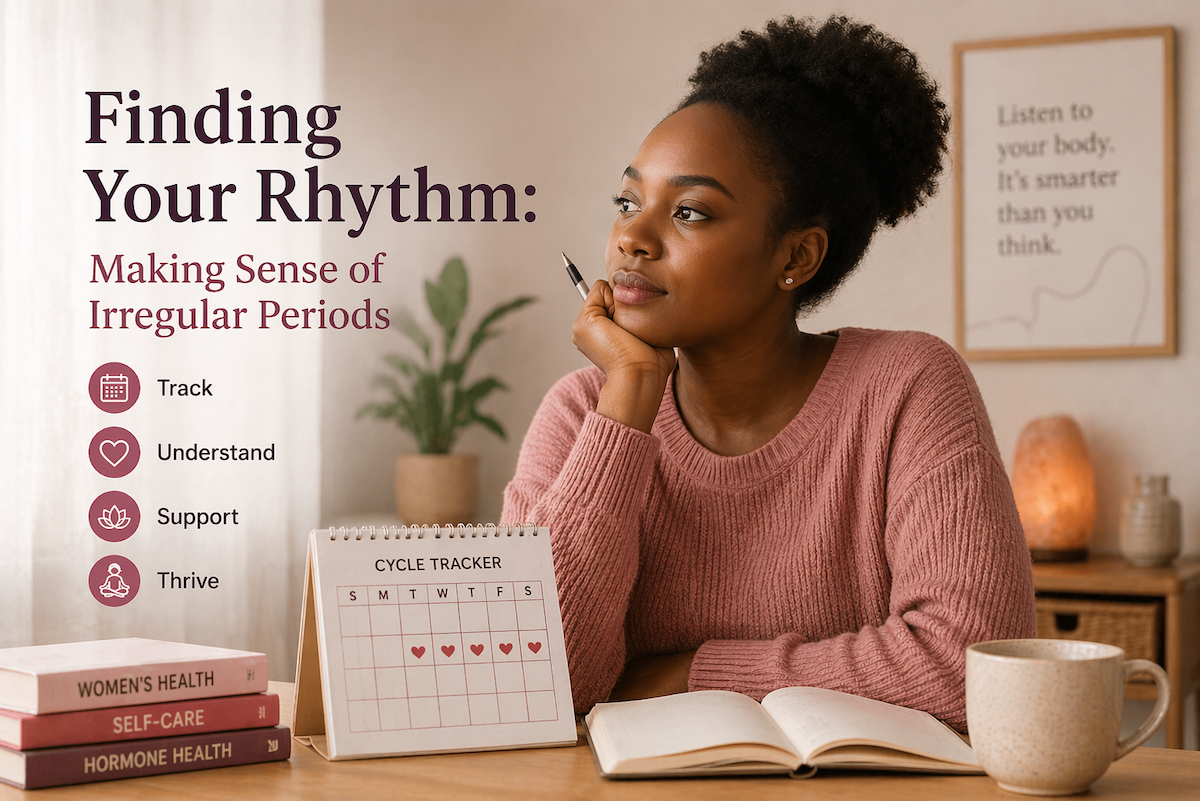
Do you remember waiting for the school bell, but it rang at a different time every single day? It would be confusing and frustrating. For many of us, that’s exactly what it feels like waiting for our period. While we hear a “normal” cycle is about 28 days, for around three out of every ten women, it’s a completely different story. If you are one of them, you are not alone, and it’s okay to look for answers.
Take Sarah, a college student. Some months, her period showed up right on time. Other months, she’d wait weeks, anxiously checking the calendar. “It felt like a guessing game,” Sarah says. “I just wanted to know what my body was doing.”
Many things can cause this unpredictability. Sometimes, it’s like a quiet control center in your body, run by hormones, gets mixed up. Conditions with tricky names like PCOS or thyroid issues can scramble the messages. But often, it’s simpler. Significant stress (like exams or moving) or big changes in exercise or weight can act like a temporary roadblock, signaling your body to pause its usual cycle.
Your body also has natural “season changes.” When you first start your period as a teenager, and later in life as you near menopause, your cycle can be as unpredictable as springtime weather. It is very common for periods to be sporadic during these times.
So, what does an irregular period actually look like?
-
It might be like missing a train—skipping a month entirely or waiting more than five weeks between arrivals.
-
Or, it might be like a friend who visits way too often, showing up less than three weeks since their last visit.
-
Maybe the amount of flow is dramatically different each time—sometimes just a little, sometimes needing constant attention.
-
Or maybe you see light spotting between your actual periods.
It can feel a bit overwhelming, but the most powerful thing you can do is learn and take action. Sarah decided it was time to understand her body better. “I realized ignoring it wasn’t solving anything,” she explains. “I needed to talk to someone.”
When should you see a doctor? Honestly, any time you feel concerned. If your periods have suddenly changed their schedule, or if you have severe pain or other changes that make you worry, make that appointment.
Think of your gynecologist or primary doctor like a detective. They will listen to your story, maybe run some tests to check those hormone messengers, and help find the root cause. It might be simple, or it might be a medical issue that needs care. Either way, you get the knowledge you need.
“Talking to my doctor was a relief,” Sarah shares. “She helped me understand it wasn’t just ‘stress’ and gave me simple steps to track and manage things.”
Your body has its own unique rhythm. It might not always be perfect, but understanding it helps you listen to what it needs. Don’t be afraid to speak up and get support. Regaining a sense of control over your cycle is a big step toward feeling empowered and caring for your overall health. You deserve that clarity.
